

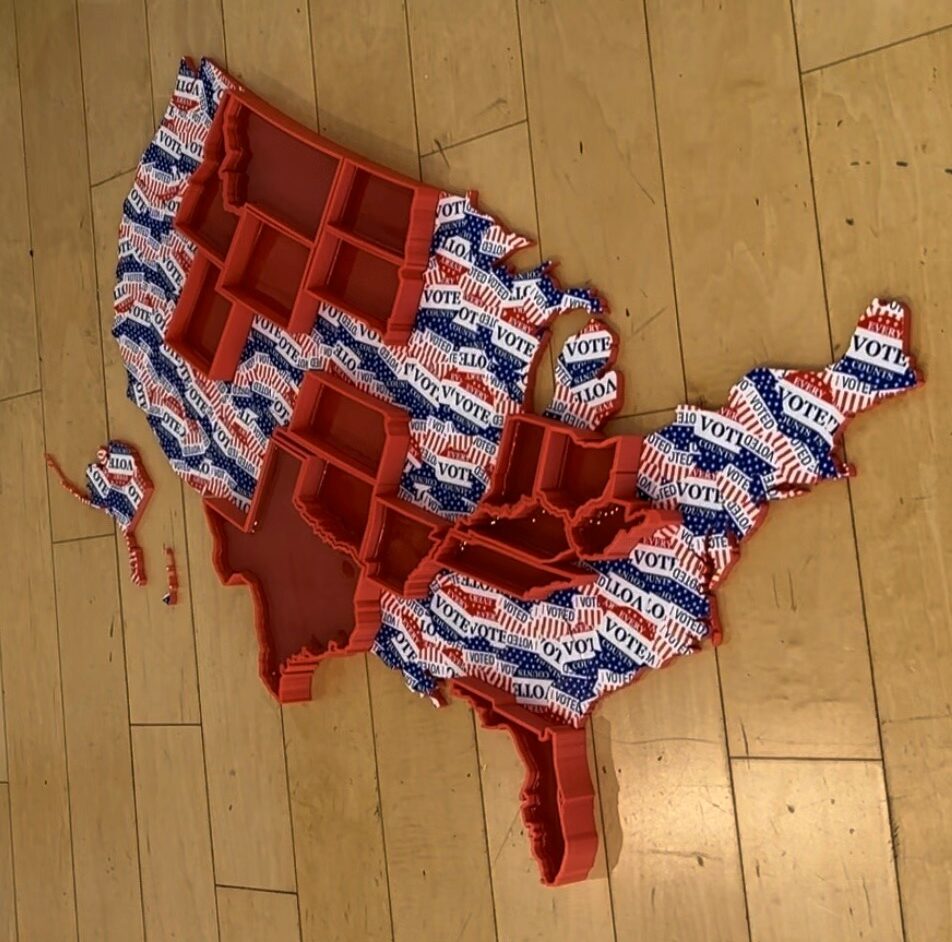
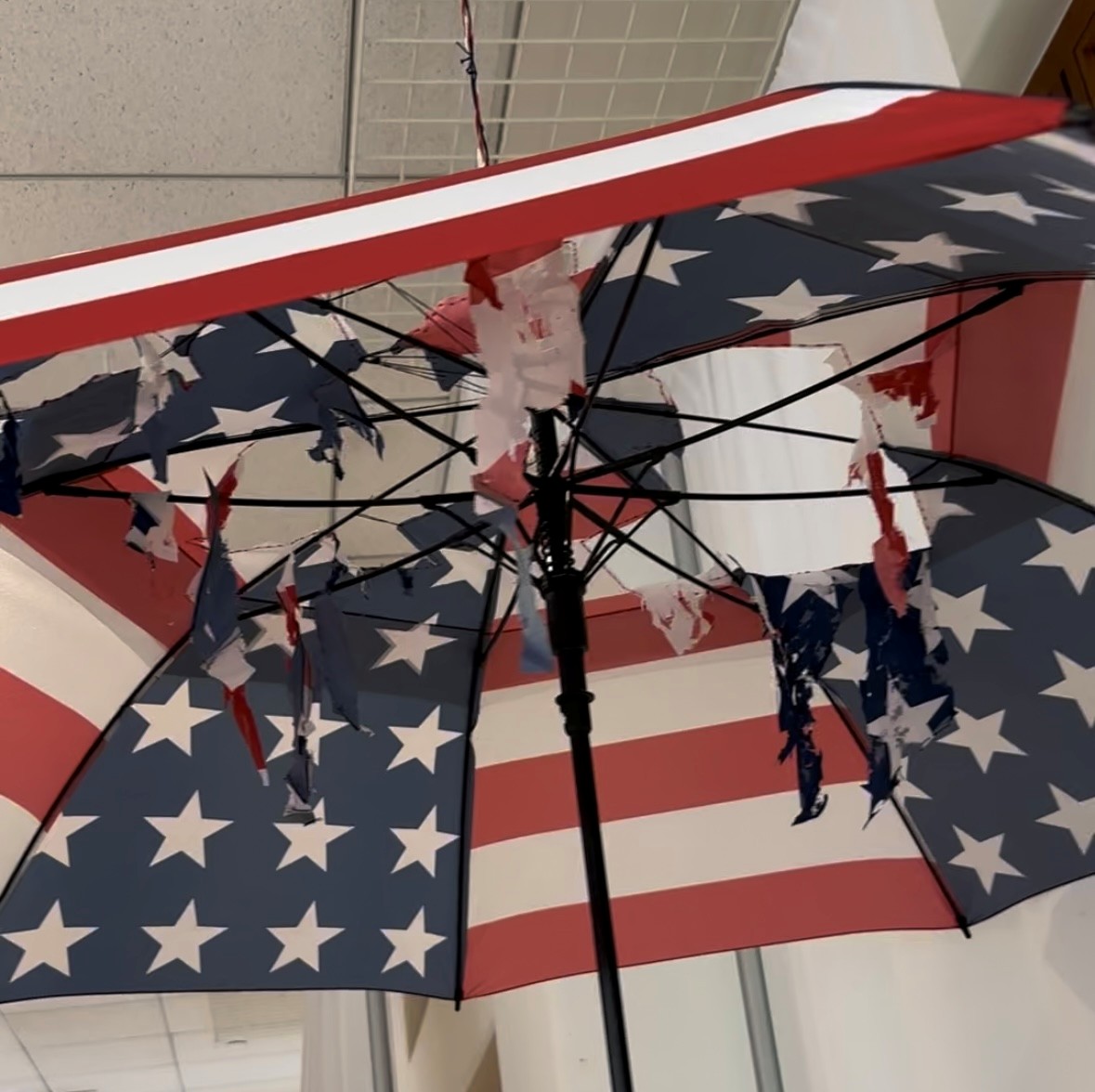
Who’s Counting?
2026 = Umbrella, 3D printed PETG, epoxy resin, embroidery floss, stickers, communication wires
Ruth Bader Ginsburg (1933-2020), the second female Supreme Court Justice, championed the oppressed with a more expansive view of equality than her conservative counterparts.
Her most famous dissenting opinion was for Shelby County vs Holder (2013), a case in which the Court struck down a provision of the Voting Rights Act of 1965 that safeguarded elections against discriminatory voting policies. She wrote that removing such guardrails was “like throwing away your umbrella in a rainstorm because you are not getting wet.”
How prescient she was when she once said, “Dissents speak to a future age.” Increasingly, state legislatures have considered bills that would restrict citizens’ ability to vote. The Brennan Center for Justice, a nonpartisan institute that works to strengthen democracy, has tracked pertinent legislation since 2011. They note that, for the first time, states enacted more restrictive than expansive voting laws in 2025. In that year, 16 states passed 31 laws to disenfranchise US citizens.
As we head toward the 2026 midterm elections, more of these laws are being considered by federal and state legislatures.
