
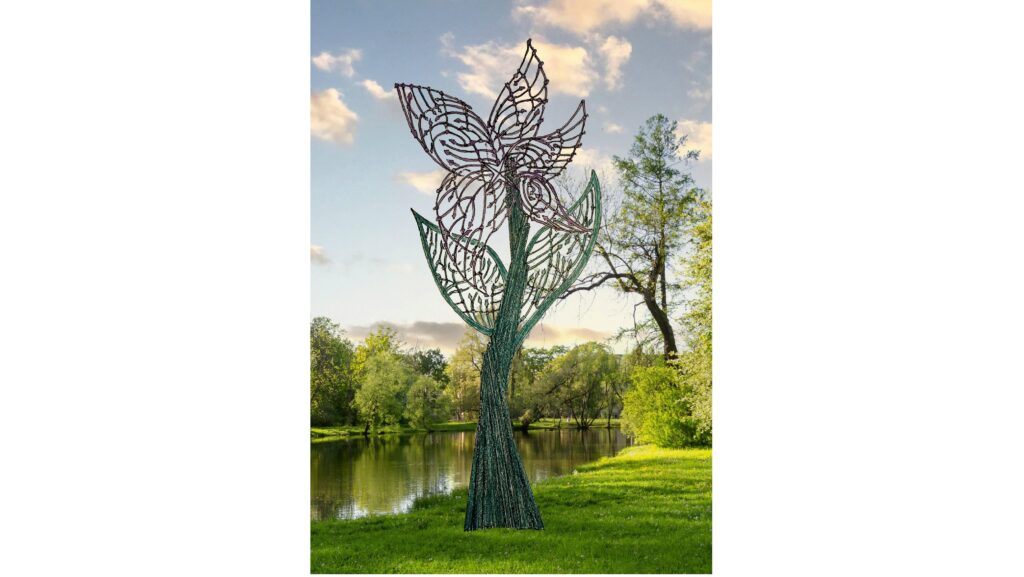
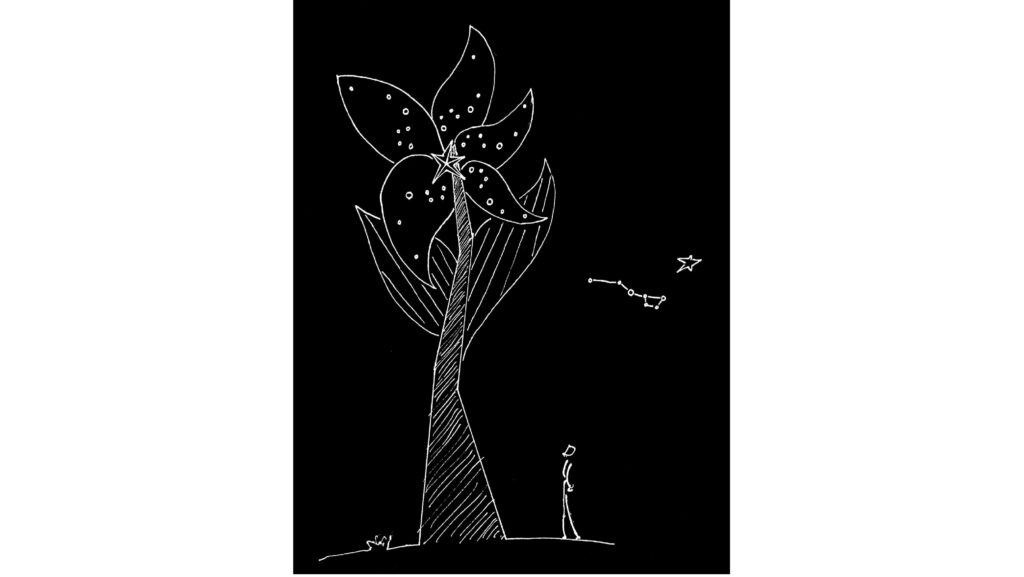
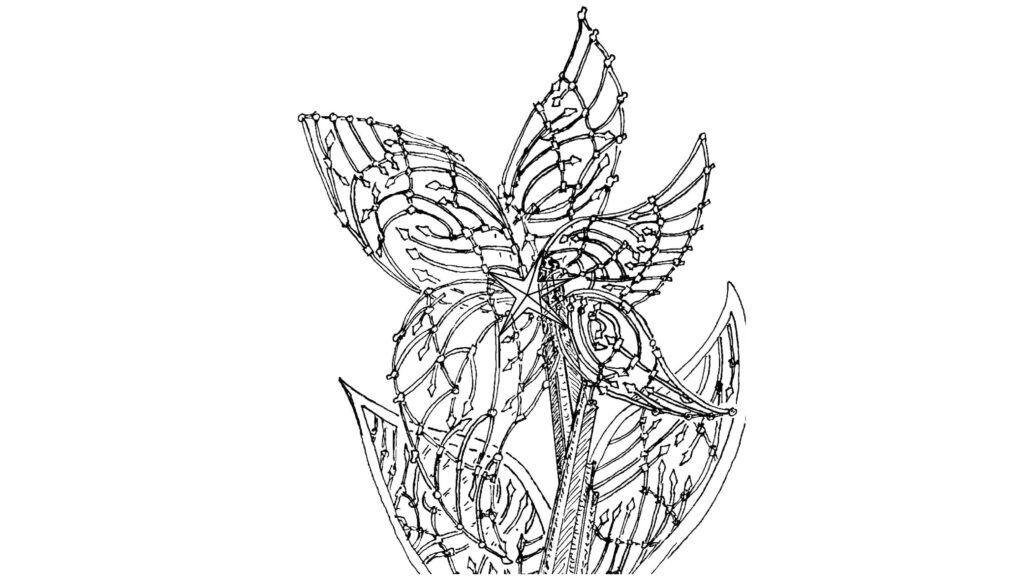
Enjoy the thought process and how Fennell’s idea for the sculpture came to life:
“I approach every project with a walk of the site, talk with the stakeholders and some history. For the St. Paul’s Transformation Project there are many exciting ideas: that this is the area where people would get off the boat and start living in America. This is where the revolution was fought-with a cannon ball in the wall of St. Mary’s. A route slaves used to escape to the North. A place fenced in during segregation. A vibrant neighborhood of music and fashion. A supportive place where neighbors took care of each other. A place of protest where equal rights were demanded. So many heroes to remember.
Research:
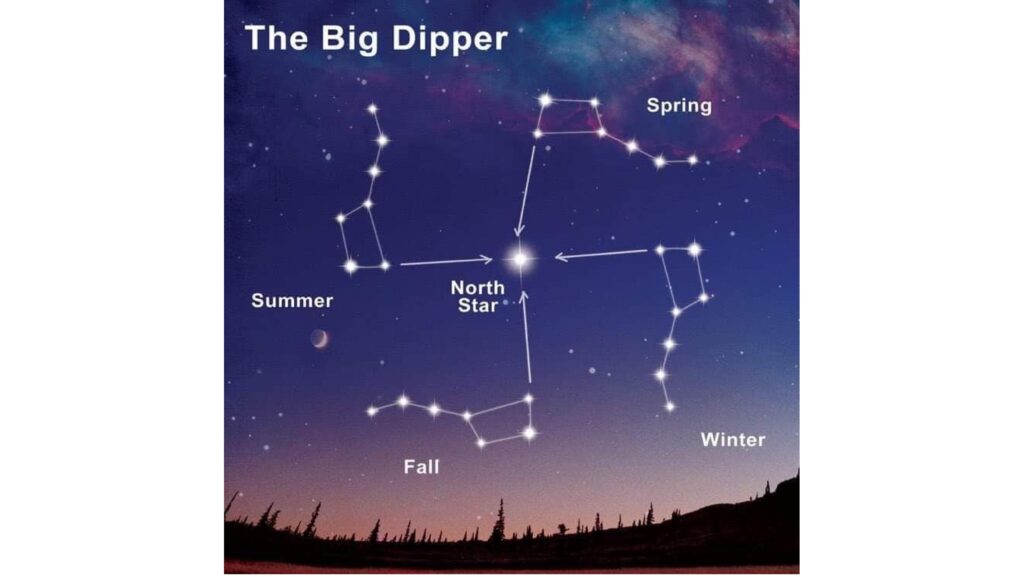
I did a bit of research into the Underground Railroad and found that the big dipper plays a big part-guiding slaves from the South using the two stars at the leading edge of the dipper to find the North Star-that leads them North to freedom. Interesting fact: the big dipper rotates in the sky over the course of a year, but its two stars on the leading edge always point to the north star.
Material:
Sometimes I come up with the form first, other times, like this one, the material drives the design. I look at the site to see if there is a local material that is packed with meaning-the wrought iron fencing around the area inspired me. It fits into the history of how this area was surrounded and fenced off from the city during segregation. How can I use this ugly material to build something beautiful-perhaps a flower? A giant flower. Picture this flower like a wire form. I add support using my pipe bender to work in 3” pipe to support the flower. (The engineer in me is always thinking about structure.)
Form:
A flower…but we need this piece to be monumental. Escaping slavery and segregation are monumental achievements. This needs to be a beacon that inspires all of us here today to strive to make things better. Better for us personally and better for those around us.
Scale:
This is the third thing that sculptors use to communicate. Material, Form and then Scale. To understand how big a thing needs to be, I look at the site, the surroundings. Across the street, there is a building three stories tall. Also I know Blessing Hancock is building another sculpture at the intersection just north of where this sculpture sits and she has expressed the desire to build tall enough to capture the intersection in parenthesis… the traffic lights there are at least 15’ tall, to 20’…so her sculpture will be around 25’ tall at least. Also there is the Martin Luther obelisk around the corner at 83’ and the dome of Saint Mary’s. We don’t want our sculpture to be bigger than the rest but we do want to talk with them, visually. To do this we need to be on the same scale. (In the end it is always a gut feeling- from past work I know that 24-30 feet is tall enough that it dwarfs the viewer who is on foot but from a distance, like as they drive by in a car, it looks like a reasonable size. There is a 3-story building across the street which is probably the thing that mostly sets the scale for this area.) Luckily when I was discussing the idea and showing my initial drawings to my assistant, Jacob Camp, he stated the obvious, “If we are making a sculpture about the Underground Railroad, why are we not using train rails?” Boom, we have our second material!
Two Materials Talk:
Good conversation is between two differing points of view. In sculpture that is often between two materials. This second material is great because it is so unlike the first material. Rails are linear and heavy verses the fencing that is light and ephemeral. Rails transport you and fences restrain you. Perfect.
At the center of the sculpture, where the stem and petals all lead will be the North Star. Seven lights will be placed on the surface of the five petals, so that at night when they are turned on they will point to the center of the flower, the North Star.”
