Offsite Gallery December 2 – January 12, 2024
Offsite Gallery group exhibition “When There Are Nine” May 8 – June 26, 2026
Wikipedia defines a foreign body as “any object originating outside the body of an organism; in machinery, it can mean any unwanted intruding object.” As the daughter of immigrants who came to the United States before she was born, she has seen all her life how she’s perceived as a foreigner when she visits her “homeland” of the Philippines, and she has even been perceived as a foreigner here in America where she was born and raised.
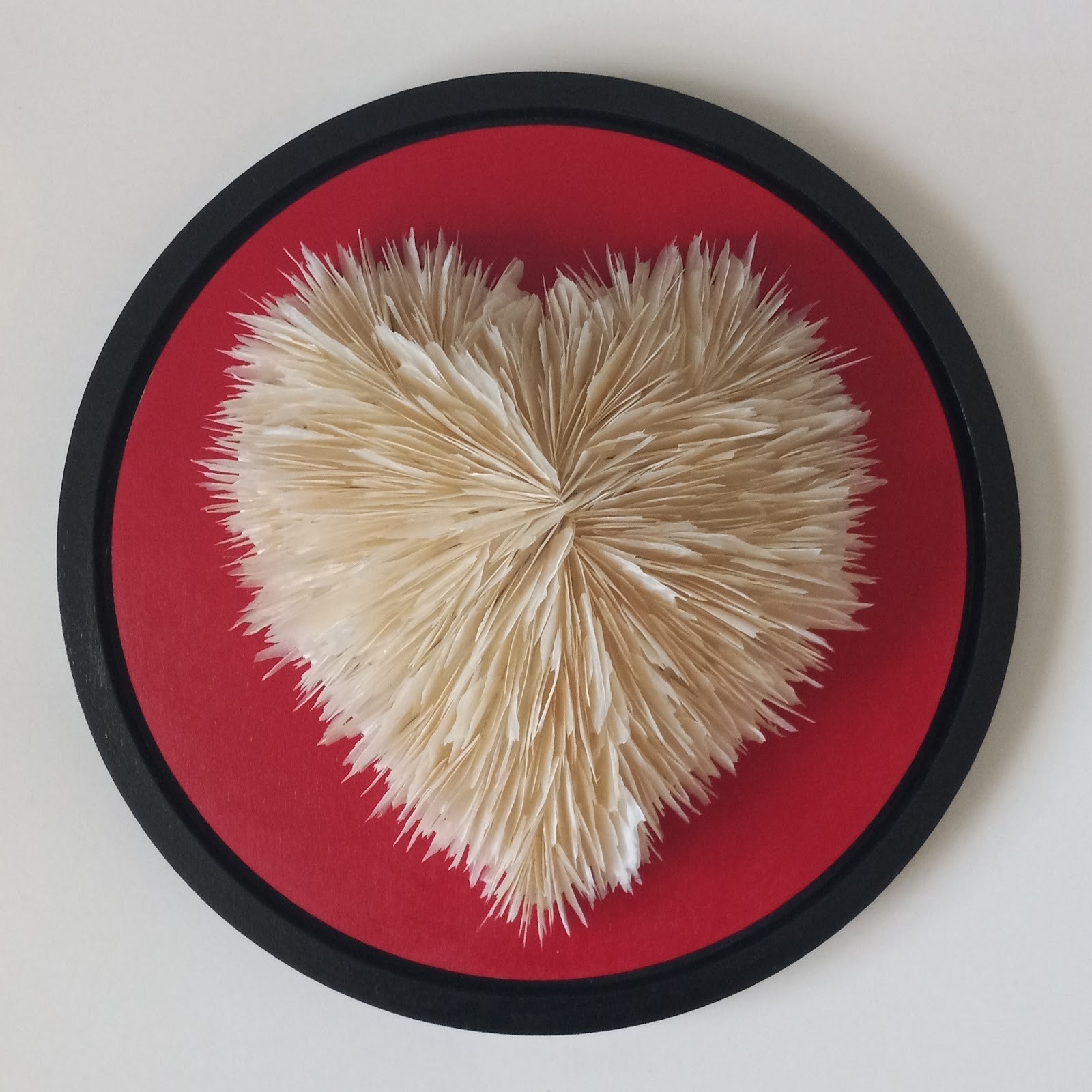
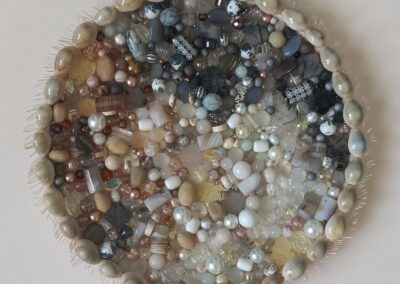
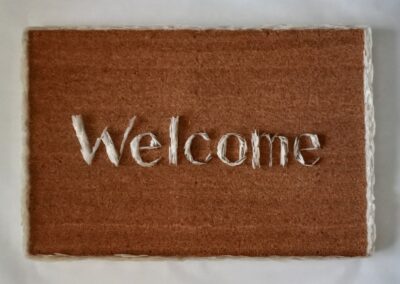
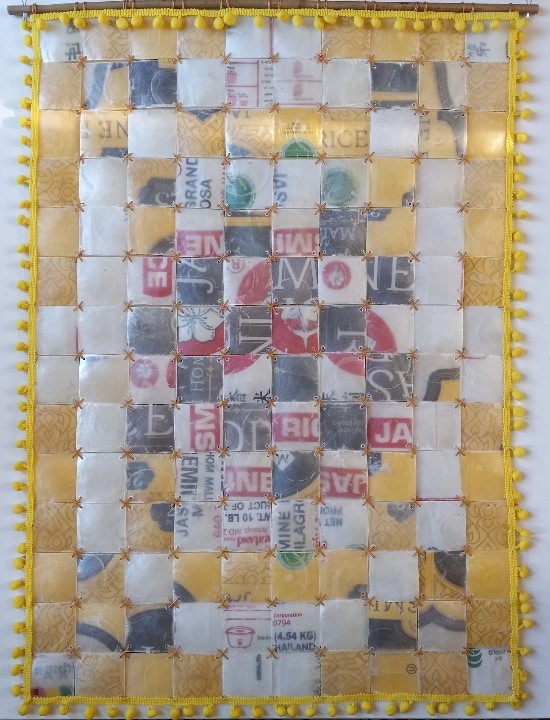
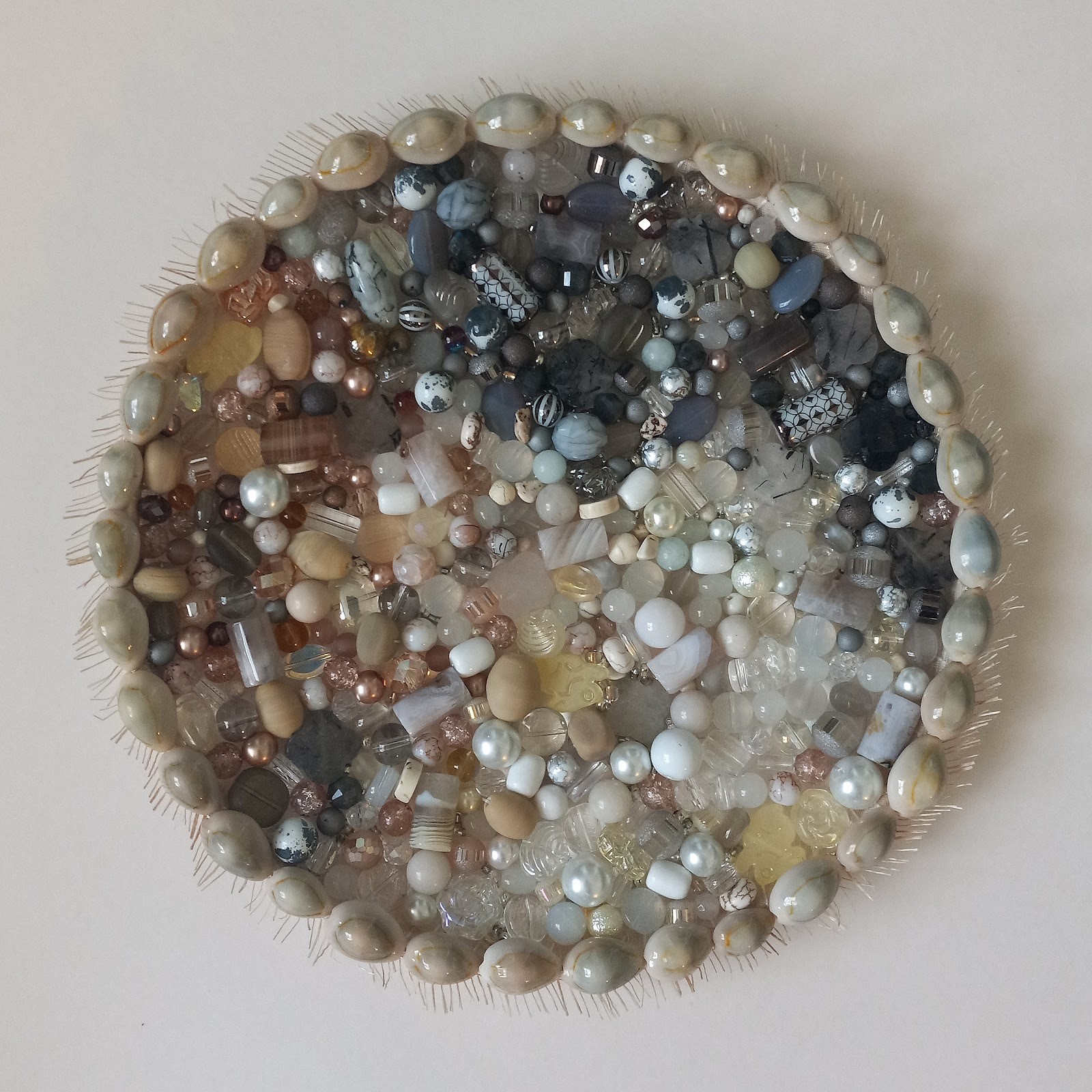
By combining indigenous Filipino materials such as piña cloth, sinamay, and capiz shells with the paint and mixed media materials she’s used for decades, Finn explores her experiences as a Filipina-American, unearthing the generational scars of colonization and assimilation, and existing as a visual artist in a community that doesn’t always understand or value this work. The tactile nature of the materials enables both Finn and viewers to meditate on the intricate push and pull between heritage and identity, and the complex dynamics of acceptance and rejection within the tapestry of our cultures and communities. Her heavily textured works give a voice to the nuanced stories of those who find themselves caught between cultures and trying to make sense of both the need to belong and the need to be authentic.
Finn’s artwork invites the viewer to explore the ever-shifting boundaries of culture and the profound impact of acceptance and rejection on one’s sense of self. It is a reminder that while cultural clashes may challenge our identity and belonging, they also give rise to new forms of expression, resilience, and empowerment. Through her work, she hopes to inspire dialogues about the complex weavings of heritage, identity, and self-determination, and the enduring power of cultural narratives in shaping our lives and our sense of belonging within a diverse and evolving world.
Rowena Federico Finn is an award-winning artist whose works have been shown in regional, statewide, and national juried exhibitions for over thirty years. She has taught classes and workshops for various regional arts organizations for over a decade, including the Governor’s School for the Arts and the Chrysler Museum. Her artwork and activism are deeply entwined, and her volunteer work deeply informs the direction of her art and teaching. A passionate and dedicated activist for the rights and needs of underrepresented communities, she is a member of the WHRO Community Advisory Board, and has served on the Virginia Asian Advisory Board, The Virginia Art Education Association’s DEIA Committee, and the VBCPS Equity Council. Rowena resides in Virginia Beach, VA with her talented, loving, supportive husband and three creative and inspiring kids.
-
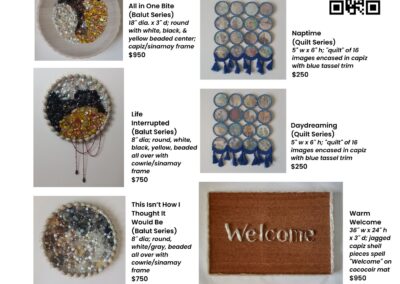
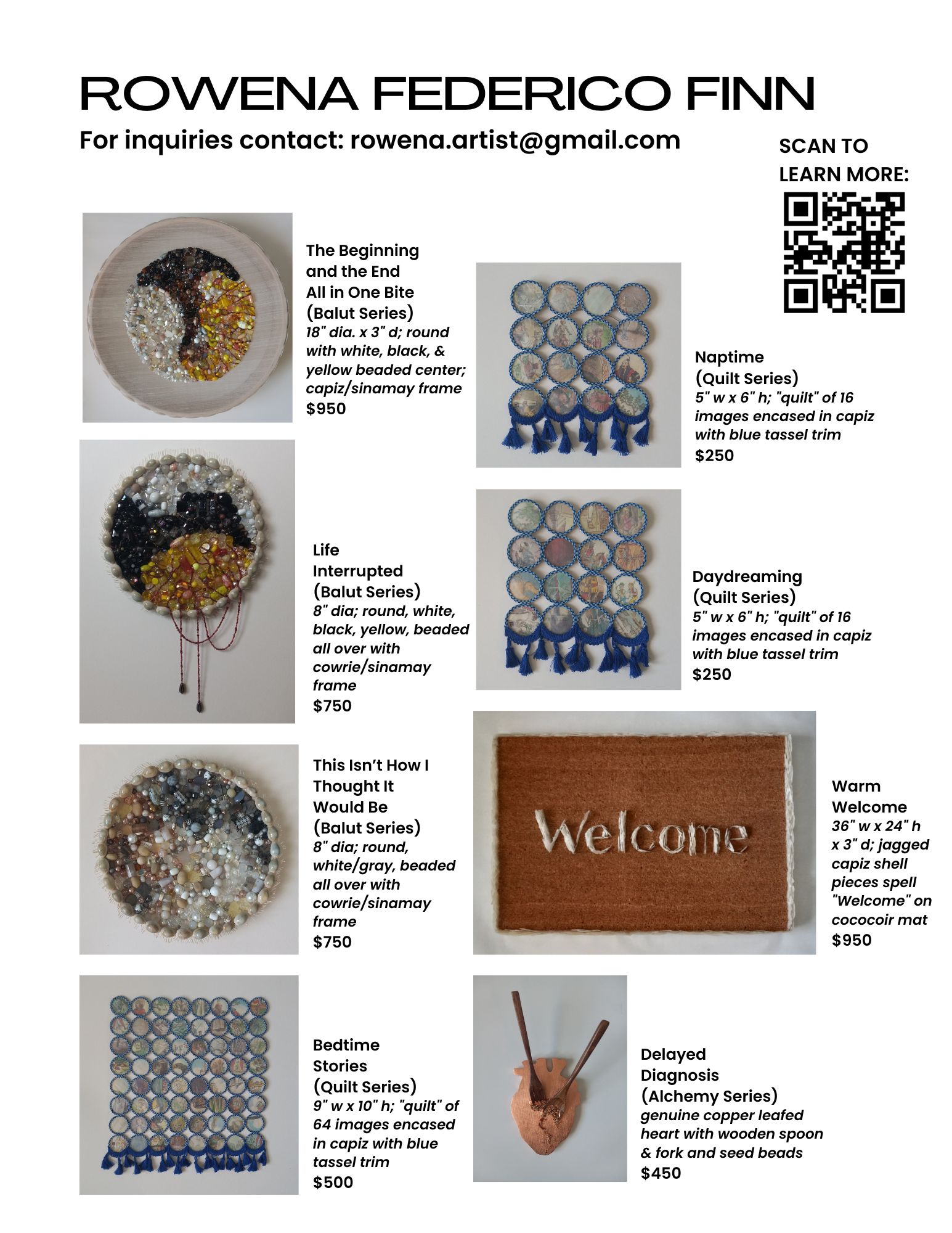
Price List
-
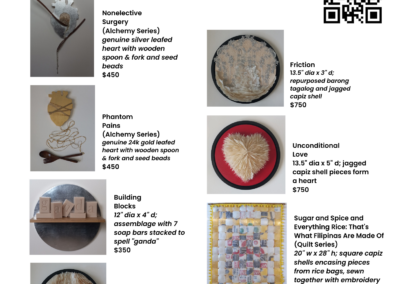
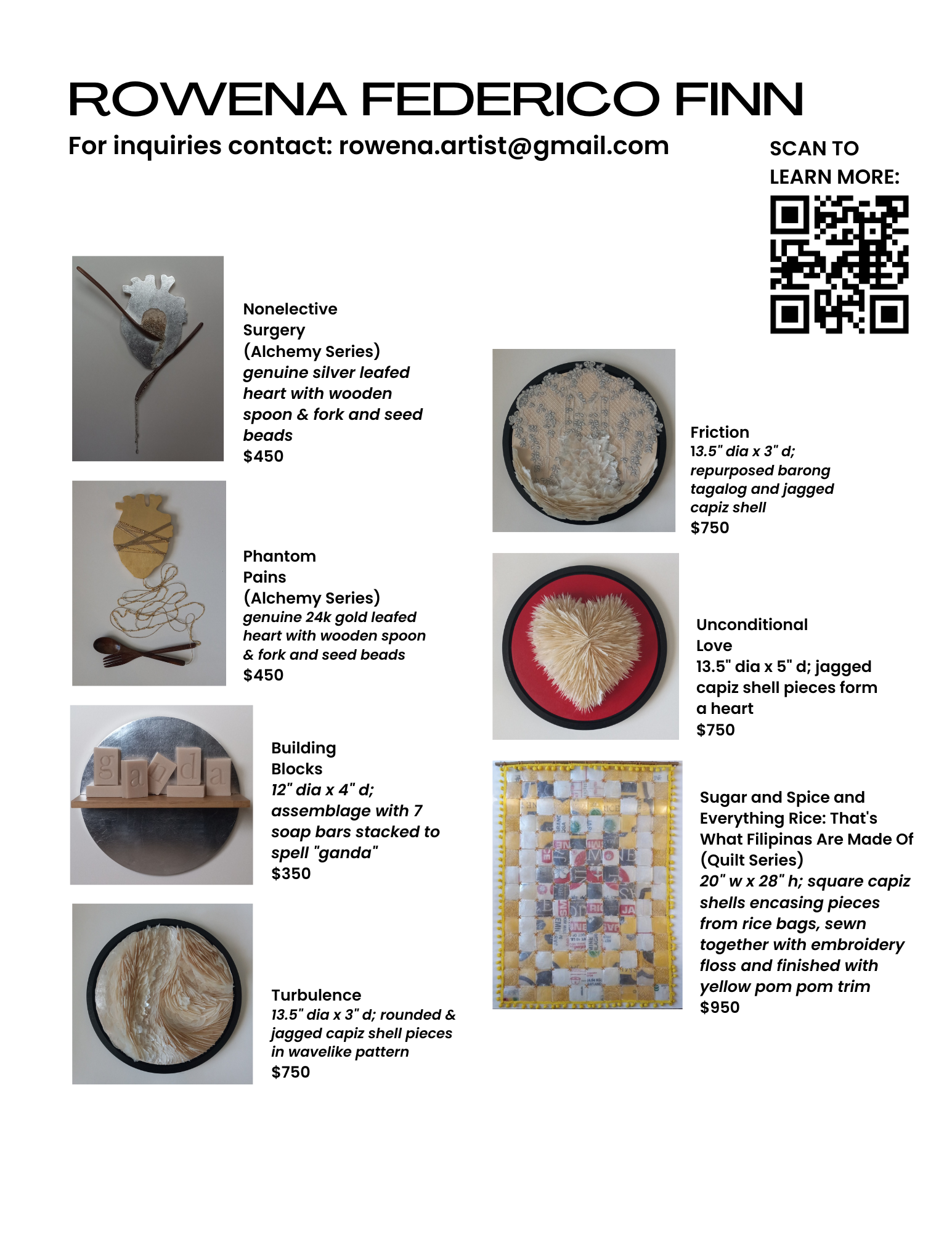
Price List
-
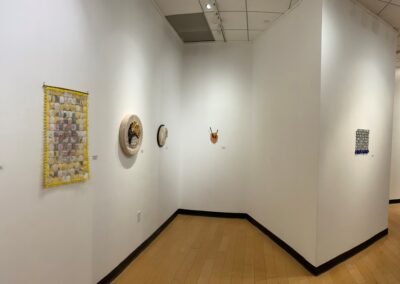
Rowena Federico Finn at the Offsite Gallery
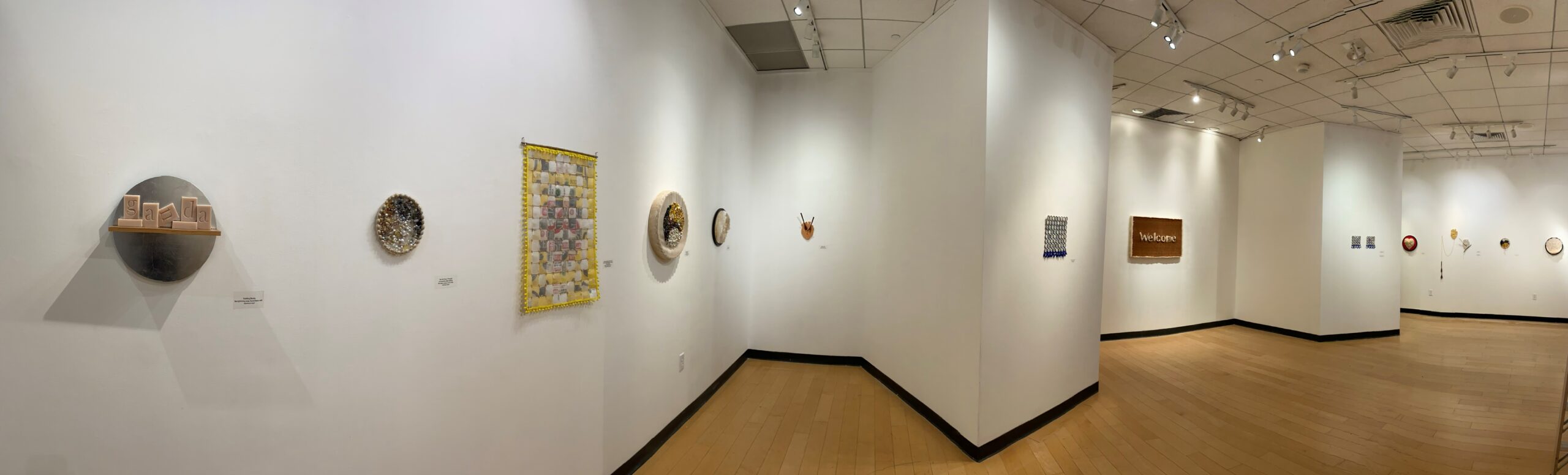
-
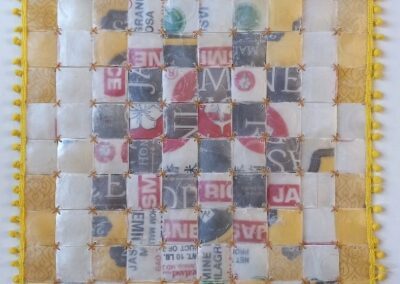
"Sugar and Spice and Everything Rice, That's what Filipina's are Made Of"
-
-
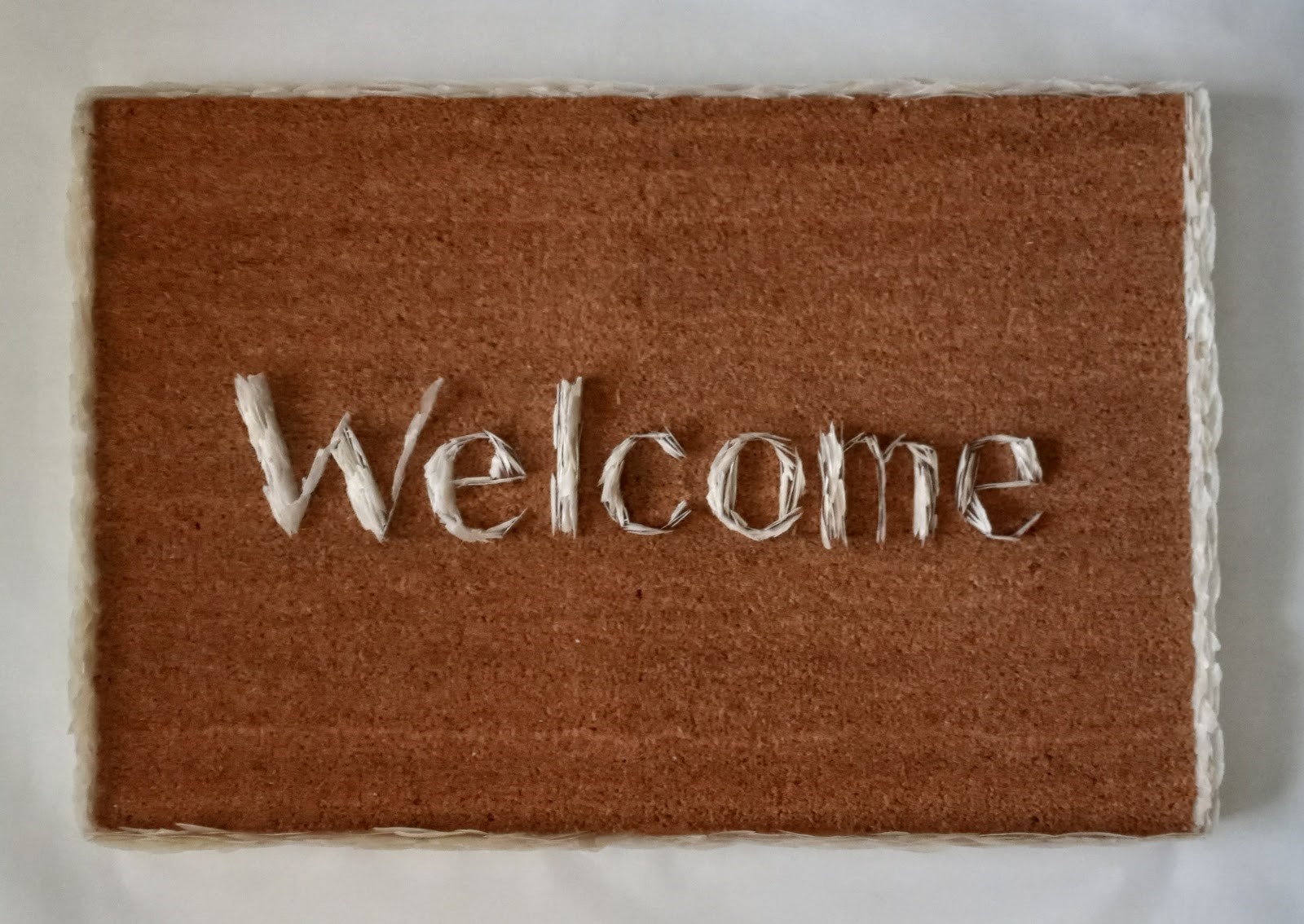
Enjoy this interview by Norfolk Arts exhibiting artist 2019 Mensah Bey with Rowena Finn!
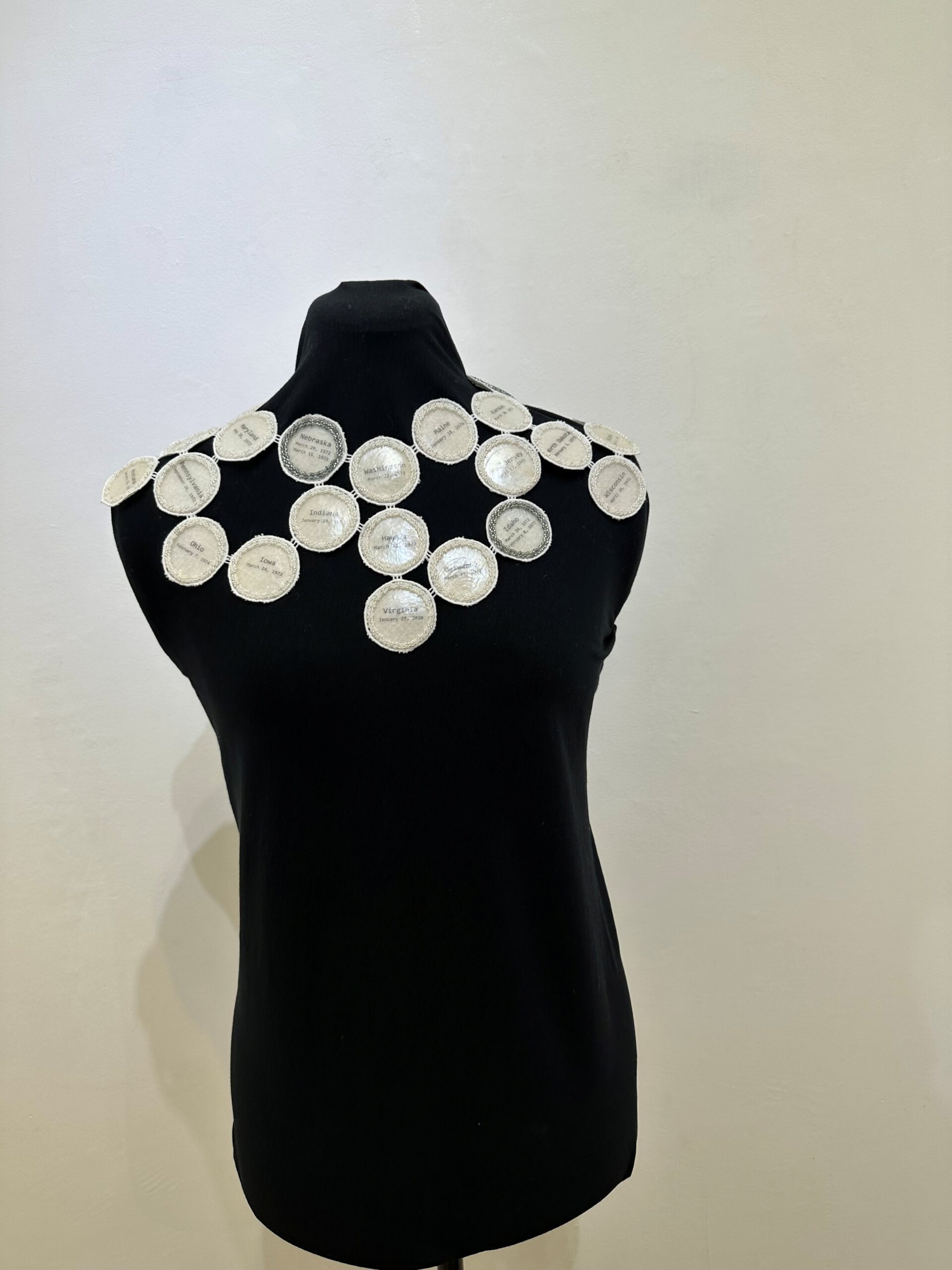
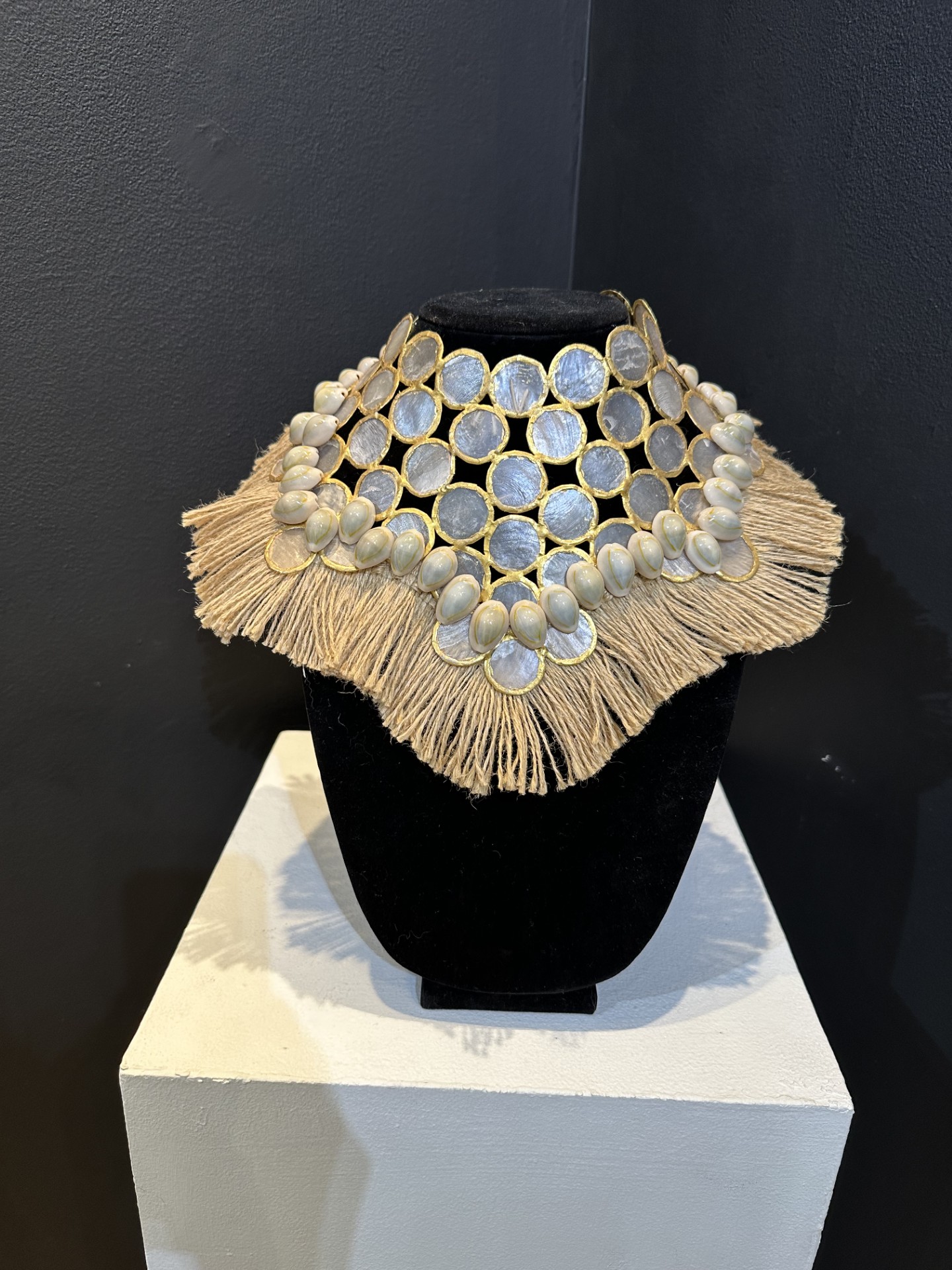
Pictured below, on view during “When There Are Nine”
38, give or take
2026 = Capiz shells with gel transfer, white lace fabric, glass seed beads
38, give or take reflects on the unfinished history of the Equal Rights Amendment, first introduced to Congress in 1923, more than fifty years before Hawaii became the first state to ratify it in 1972. A constellation of hand-sewn capiz shells bears the names and ratification dates of individual states, alongside the dates five states later attempted to rescind their ratification, underscoring the instability of rights that remain conditional and/or delayed for women across the country. Although the ERA reached the required 38 state ratifications in 2020—nearly a century after it was first proposed—its legal status remains contested. The text is transferred onto the shells through a gel transfer process, while glass seed beads in two contrasting color schemes form bezels connecting the capiz to delicate lace fabric. Drawing on white as a historic symbol of the women’s suffrage and women’s rights movements, the wearable collar evokes strength, solidarity, and visibility, while the translucent capiz shells suggest human fragility and resilience—qualities that shape both the creation of laws and the uneven ways they are interpreted and enforced.
Body Armor
2024 = Capiz shells, cowrie shells, copper foil, solder, 23.5 kt gold leaf, fabric trim
Body Armor examines the impossible negotiations women make each day simply to move through the world. Constructed from capiz shells, cowrie shells, gold leaf, and natural fibers, the piece resembles ceremonial armor I imagine might have existed in the Philippines had colonial conquest not disrupted indigenous forms of adornment and power. Throughout my work, capiz shells symbolize both human fragility and resilience—their thin, translucent surfaces appearing delicate while possessing an unexpected durability. Clothing and presentation, regardless of how modest or revealing, are continually subjected to interpretation, scrutiny, and, too often, used to justify violence and sexual assault. Throughout history, women have been forced to fashion forms of armor for ourselves, protecting not only our physical bodies but also our sense of self, autonomy, and psychological safety. By transforming fragile materials into a structure of resilience, Body Armor reflects the exhausting vigilance required of women simply to exist.
-
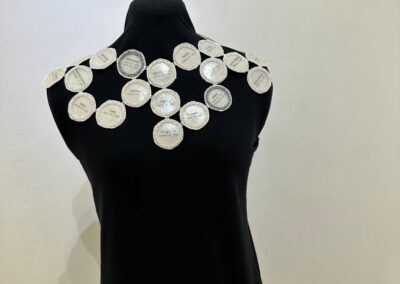
38 GIVE OR TAKE
-
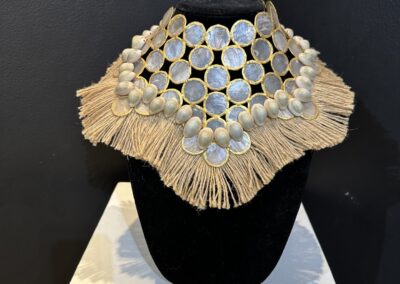
BODY ARMOR